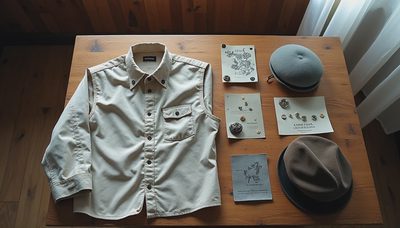
I found my first true vintage score at a Brooklyn estate sale five years ago, and it was pure luck. A brownstone in Park Slope had opened its doors for a weekend sale, and inside, amid the old furniture and kitchenware, was a closet full of 1970s silk blouses, untouched, still on their original hangers. That day, I realized that **estate sale vintage clothing Brooklyn** offers are unlike anything you’ll find at a weekend flea market. The clothes haven’t been picked over by dealers; they’re coming straight from someone’s life, with all the stories and smells still attached.
Estate sales are different from thrift stores or flea markets because they’re not curated. You’re walking into a home where someone lived for decades, and their wardrobe is waiting for you to discover. The best finds are often buried under newer pieces or shoved in the back of a closet. If you know what to look for, Brooklyn estate sales can be goldmines for original vintage — not reproductions, not fast fashion, but the real thing from the 1940s through the 1980s.
Why Estate Sales Beat Flea Markets for Vintage Clothing
I love the Brooklyn Flea — it’s a ritual. But the prices have gone up, and the inventory has homogenized. Dealers know what’s trending, and they price accordingly. At an estate sale, the family running the sale often just wants to clear out the house. They don’t know that a 1960s beaded sweater is worth $200; they’ll price it at $20. That’s why **estate sale vintage clothing Brooklyn** can be significantly cheaper than the same piece at a curated vintage shop. I once found a 1950s cashmere cardigan with mother-of-pearl buttons for $12 at a sale in Carroll Gardens. At a flea market, that same piece would have been marked at least $80.
Another advantage: estate sales often have entire seasons of clothing from one person’s life. You get a coherent picture of an era’s fashion, not just random pieces. I’ve found complete 1970s trouser-suit sets, still with the dry cleaner’s tags attached. The quality is often better because the clothes were worn and cared for, not just stored away in a warehouse.
How to Spot Real Vintage at Brooklyn Estate Sales
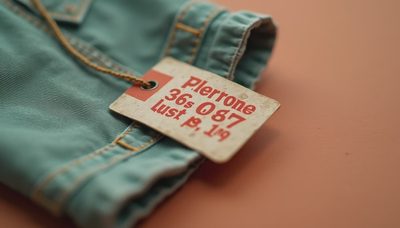
Not everything labeled “vintage” at an estate sale is actually old. You have to train your eye. The first thing I check is the tag. Pre-1980s clothing usually has fiber content and care instructions printed on a thin, often yellowed tag. If it says “Made in USA” and has a union label, you’re likely looking at something from the 1960s or 1970s. Zippers are another giveaway. Metal zippers (especially Talon or YKK with a brass finish) are a good sign of age; plastic zippers that feel cheap are often newer reproductions.
Pay attention to seam finishing. Vintage garments were often finished with french seams, bound seams, or hand-picked hems. If the seams are serged with a modern overlock machine, it’s probably not vintage. Fabric texture matters too — polyester from the 1970s has a distinct hand feel, different from modern polyester. And don’t overlook the smell. Real vintage has a particular scent — mothballs, cedar, old perfume — that can’t be faked.
Another tip: look at the sizing. Vintage clothing runs small compared to modern sizing. A 1970s size 10 is probably a modern size 6 or 8. Don’t be discouraged if you can’t fit into something; it’s often worth buying anyway for the fabric or the buttons, which you can repurpose.
The Best Brooklyn Neighborhoods for Estate Sale Hunting
Park Slope, Brooklyn Heights, and Cobble Hill have the highest concentration of estate sales featuring **estate sale vintage clothing Brooklyn** from the mid-20th century. These neighborhoods were home to families that settled in the 1950s and 1960s, and their children — now in their 70s and 80s — are downsizing or moving to assisted living. The sales are often run by professional estate sale companies like Anything But Ordinary or L&D Estate Liquidators, which list sales on sites like EstateSales.net and Craigslist. I check those listings every Thursday night for weekend sales.
For more off-the-beaten-path finds, try the neighborhoods along the Staten Island Ferry terminus or the eastern edges of the borough, like Marine Park or Canarsie. Those sales are less trafficked by vintage hunters, and the prices are lower. Just be prepared to dig — the best pieces are often buried in closets or packed in boxes in the basement.
What to Look For — and What to Leave Behind
My personal rule: buy what you would wear, not what you think you can resell. The magic of **estate sale vintage clothing Brooklyn** is that you can build a wardrobe with history, not just a collection of trophies. Look for natural fibers like wool, silk, and cotton. Avoid anything with heavy stains, brittleness, or an overpowering musty smell that won’t come out. Leather and suede can be salvageable, but check for dry rot by gently bending the material — if it cracks, leave it.
I always bring a small flashlight to check for stains and a measuring tape to compare with my own clothes. And I bring cash, because many estate sales are cash-only. The thrill of finding a piece that feels like it was made for you — that’s why I keep going back.
So next weekend, skip the crowded flea market and find a local estate sale. You might walk away with a piece of someone’s past that becomes part of your present. The best clothes don’t just age. They remember.