

A **vintage sundress** is one of those rare wardrobe pieces that does a lot without asking for much. It can feel breezy and practical, romantic without trying too hard, and deeply personal in a way new clothes often are not. When I find a good one on a rack, I always pause for a second before I touch it. You can usually tell something from the fabric alone: crisp cotton that has softened with washing, a faded floral that only time can make, straps mended by hand, a hem let down and sewn again. The best clothes don't just age. They remember.
What makes a vintage sundress worth bringing home
Not every old summer dress deserves the word vintage in the meaningful sense. Some are simply old. A worthwhile **vintage sundress** usually has at least one thing modern mass production tends to skip: a beautiful fabric, thoughtful construction, or a shape that sits on the body with ease rather than forcing it. I look first for cotton, linen, rayon, and occasionally barkcloth or polished cotton, depending on era. These fabrics tell the truth quickly. They either feel alive in your hands, or they don't.
Then I check the structure. Are the seams tidy? Is there extra seam allowance that suggests it was made to last and maybe be altered? Does the zipper look like metal rather than plastic? Is the bodice lined, or are the straps neatly finished? Small signs like this matter more than a famous label. A dress from a regional maker or an old department store can be far more special than something with a recognizable name but weak fabric.
Condition matters too, but not in a perfectionist way. I can forgive a tiny pinhole near a hem or some gentle fading at the shoulders. I am less forgiving of brittle elastic, sweat damage under the arms, or shattered rayon. A **vintage sundress** should still want to be worn, not merely admired on a hanger.

How to spot era clues without needing a fashion degree
You do not need to memorize every decade to shop well, but a few clues help. A 1940s sundress often has practical charm: wider straps, side metal zippers, floral or novelty prints, and a waist that is defined without feeling sugary. In the 1950s, you may see fuller skirts, fitted bodices, crisp cottons, and patio-dress energy, even in simpler day pieces. The 1960s can go cleaner and more graphic, while the 1970s often bring softer lines, gauzy cotton, ditsy florals, and handmade details.
Labels can help date a piece, but they are not everything. Union tags, older care labels, and the absence of modern fiber-heavy branding can all offer hints. More useful, honestly, is learning how a garment is made. A hand-finished hem, generous seam allowance, and a sturdy zipper often tell me more than a logo ever could.
One note I always give friends: do not let the word "retro" confuse you. A retro-inspired dress is designed to look older. A **vintage sundress** actually carries the construction habits of its time. The difference is subtle at first, then obvious once you start handling enough pieces.
Fit, tailoring, and the quiet miracle of trying things on slowly
Summer dresses are notorious for looking easy and fitting strangely. That is not your body's fault; it is the cut. Old sizing runs smaller, bust shaping can be specific, and straps are often shorter than modern ones. So if a **vintage sundress** nearly works, ask whether it needs a simple fix rather than deciding it failed you. Straps can be lengthened. A waist can sometimes be let out if there is seam allowance. A too-long hem can become your favorite detail with the right sandal.
What I usually tell people is to fit the hardest point first: bust, ribcage, or waist, depending on the dress. The rest is often easier to alter. If the fabric has no give and the bodice pulls, walk away unless you truly love it and have a tailor you trust. If the dress skims but does not cling, you are probably in good territory.
I also think a mirror can rush you. Move in it instead. Sit down. Raise your arms. Check whether the straps slip. A good **vintage sundress** should allow you to live a day in it, not just pose in a doorway with a basket of apricots.
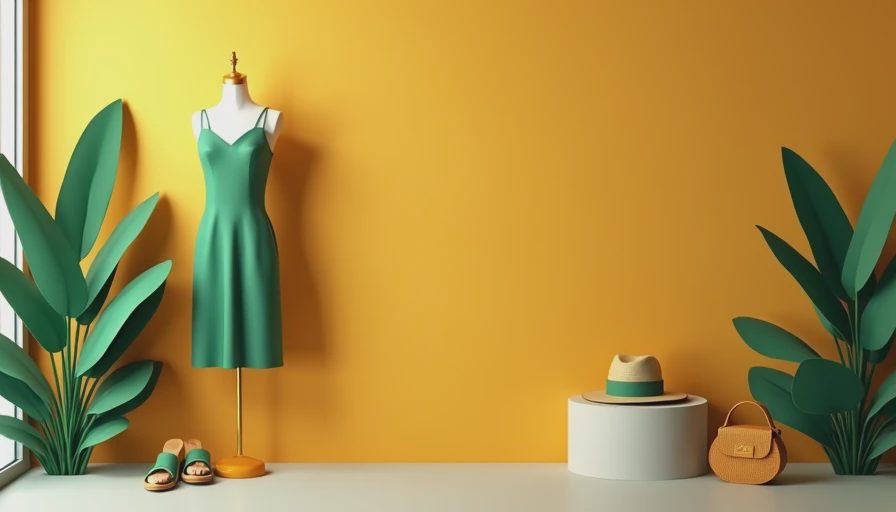
How I style a vintage sundress so it feels like a life, not a costume
This is where people get nervous, but it is simpler than the internet makes it seem. If the dress is vivid, let everything else be quiet. Flat leather sandals, a faded cardigan, a canvas tote, a worn-in denim jacket. If the dress is delicate, give it one grounded thing: clogs, a big men's watch, a sun-faded work shirt tied at the waist. Contrast keeps sweetness from becoming theater.
Print matters too. A tiny floral **vintage sundress** can go very pretty very fast, so I like to pair it with pieces that have some weather in them. Scuffed loafers, a basket bag with a broken-in handle, silver jewelry you actually wear instead of save. For a cleaner 1960s shift-style sundress, I would go the other direction and keep the lines spare.
Most important, do not feel obligated to perform the decade. You are not recreating a catalog. You are giving an old garment a new chapter. That means sneakers are allowed. So is a giant linen shirt over the top. The point is not authenticity in every accessory. The point is making the dress belong to your life.
Caring for a vintage sundress so it lasts another summer
A little caution goes a long way. Before washing, always check for weak seams, underarm discoloration, and fabric that feels dry or papery. Cotton and linen are often more forgiving, though I still prefer cool water and a gentle soak over a rough machine cycle. Rayon requires more care because weakened rayon can tear when wet. If I am unsure, I hand wash a small hidden area first or simply dry clean with a cleaner experienced in older garments.
Hang drying is safest for most pieces, but support the weight of the dress rather than letting soaked straps do all the work. For storage, I avoid wire hangers and direct sun. A breathable garment bag or a padded hanger is usually enough. If your **vintage sundress** has fragile straps or a heavy skirt, folding it in acid-free tissue is kinder.
And mend early. A loose strap, a tiny split seam, a missing hook at the zipper—these are small repairs until they aren't. Part of loving old clothes is accepting that care is part of the romance. Not the glamorous kind, maybe. But the real kind.