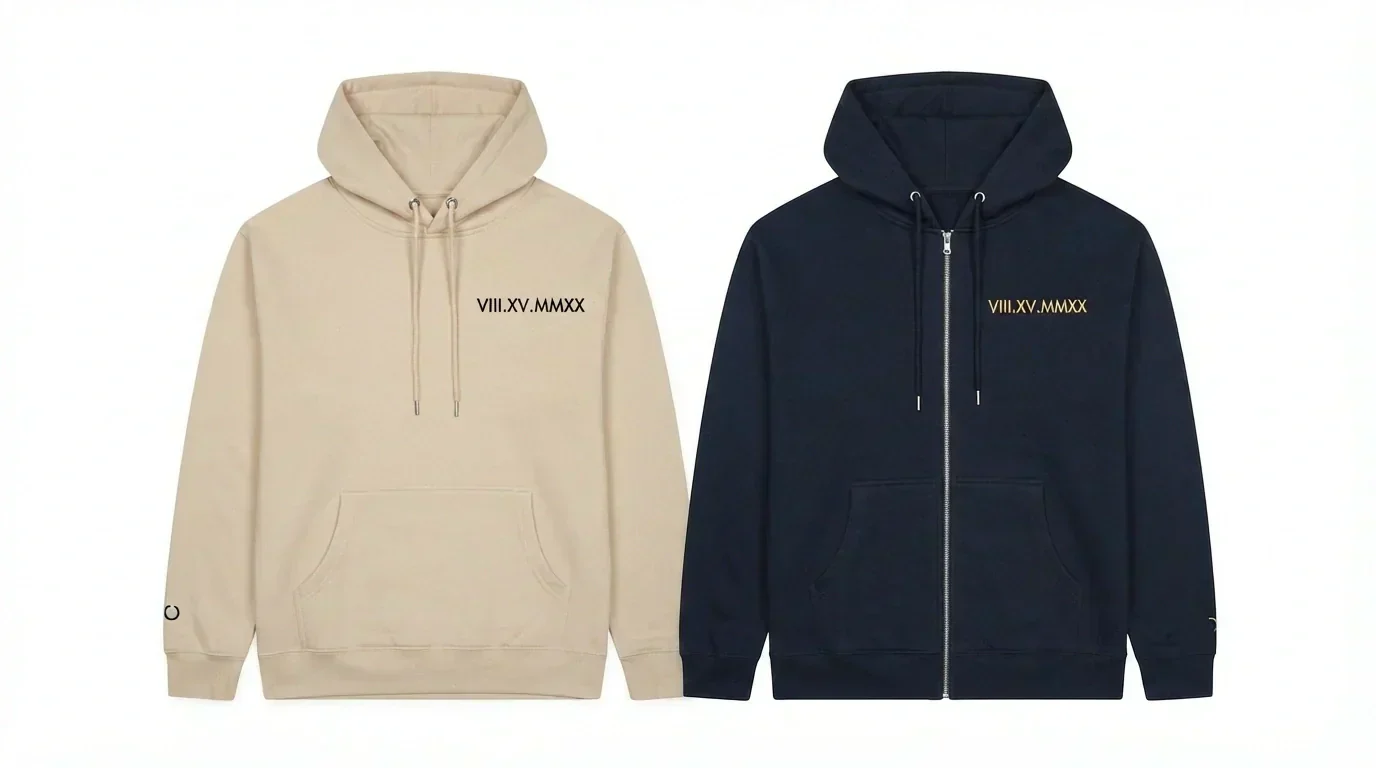
I usually write about vintage pieces — the ones with decades of wear, loose buttons, and stories that don't come from a factory line. This article is a little different. It's a closer look at a modern staple that's earned its place in just about every closet, including mine. I don't usually write about new garments, but when I do, I look for the same things: good construction, lasting fabric, and a reason to keep it around for years.
If you're new here, most of what I share is older than I am. Think 1940s work shirts, 1960s slips, and flea market finds with stains I'll never fully identify. That's the kind of archive I keep. But I also believe the best clothes — new or old — share one thing: they remember.
You can read the rest of this article below. When you're done, I've linked a few of my favorite vintage stories at the bottom. I think you'll find they have more in common than you'd expect.
Few garments have earned a permanent spot in every wardrobe quite like the pullover hoodie. Soft, versatile, and effortlessly cool, it moves from lazy Sunday mornings to city streets without missing a beat. Whether you're new to the style or simply want to know more about what makes this garment tick, this guide covers everything: the definition, the history, how it compares to zip-up styles, how to wear it, and how to make it unmistakably yours with custom embroidery.
📋 Table of Contents
What Is a Pullover Hoodie?

A pullover hoodie is a casual, hooded sweatshirt worn by pulling it over your head — no zipper, no buttons, just one smooth motion from top to bottom. The name says it all: "pullover" describes how you put it on, and "hoodie" refers to the attached hood, usually fitted with a drawstring so you can adjust the opening to your liking.
Sometimes called a hoodie pullover or pullover sweatshirt, this garment is defined by a tight cluster of features that have remained remarkably consistent for nearly a century:
🎽 No-Zipper Design Slips on over the head for a clean, unbroken front panel.
🧢 Attached Hood Adjustable drawstring for a snug or relaxed fit around the face.
🦘 Kangaroo Pocket The signature front pocket that doubles as a hand warmer.
🔘 Ribbed Hem & Cuffs Stretch-ribbed edges lock in warmth and shape.
📐 Relaxed Silhouette Designed for layering and all-day wear comfort.
🎨 Large Front Canvas Uninterrupted chest area — perfect for embroidery or graphics.
One-sentence definition: A pullover hoodie is a slip-on, hooded sweatshirt with a kangaroo pocket, ribbed cuffs, and an unbroken front — the original comfort garment that never goes out of style.
A Brief History of the Pullover Hoodie
The pullover hoodie's story is surprisingly rich for a garment that looks this effortless.
1930s — Born out of necessity. Champion Products (then Knickerbocker Knitting Company) created the first hooded sweatshirt for workers in frigid New York warehouses. The hood was purely practical: a way to keep workers warm without the bulk of a hat.
1970s — Claimed by the streets. As hip-hop culture emerged from the South Bronx, the hoodie became synonymous with creative freedom and street identity. It offered both warmth and a kind of visual anonymity — a blank canvas for self-expression.
1980s–1990s — Adopted by subcultures. Skateboarders, punk musicians, and college students on both coasts embraced the pullover hoodie as a symbol of anti-establishment cool. Films and music videos cemented its cultural permanence.
2000s–today — Fashion without borders. Luxury designers began reworking the hoodie on the runway while everyday wearers kept it grounded. Today the pullover hoodie appears in every corner of fashion, from athleisure to minimalist streetwear, and increasingly as a canvas for meaningful personal customization.
Pullover Hoodie vs. Zip-Up Hoodie: Key Differences

Both styles share the same DNA, but choosing between them comes down to how you live in your clothes. Here's a side-by-side breakdown:
Category | Pullover Hoodie | Zip-Up Hoodie |
|---|---|---|
How You Wear It | Slip over the head — no fastening needed | Open via full-length zipper for easy on/off |
Silhouette | Roomier, more relaxed by default | Can be worn open (jacket-like) or closed |
Warmth | Superior — no zipper gap for cold air | Slightly less insulating at the zipper seam |
Layering | Ideal as an outer layer over tees or turtlenecks | Easier as a mid-layer — open it when hot |
Aesthetic | Classic, laid-back, streetwear heritage | Sporty, functional, versatile |
Pocket Design | Kangaroo pocket (iconic front pouch) | Typically side pockets or zippered pockets |
Best For | Everyday casual, lounging, street style | Active wear, outdoor activities, office-casual |
Custom Embroidery | Wide, uninterrupted chest canvas — ideal | Zipper limits placement options |
The verdict: If you want maximum warmth, a timeless look, and the best surface for custom artwork or embroidery, the pullover is the clear winner. If you prioritize the ability to quickly vent heat or wear it open like a light jacket, the zip-up earns its place.
How to Choose the Right Fit and Fabric

Fit Guide
Standard / Regular fit — The go-to choice. Comfortable across the shoulders, slightly relaxed through the body. Works for almost everyone.
Oversized fit — Intentionally large, often one or two sizes up. Defines the modern streetwear aesthetic; great for layering over long-sleeve shirts.
Slim / Tailored fit — Follows the body more closely. Pairs cleanly with structured outerwear like denim jackets or bombers.
Fabric Guide
100% Cotton — Breathable and naturally soft. Can shrink with repeated washing, so size slightly up.
Cotton-Polyester Blend — The most popular everyday option. The polyester adds durability, reduces shrinkage, and helps the garment hold its shape wash after wash. This is the construction TIUOUS uses for their custom embroidered hoodies.
Fleece (Brushed Interior) — A fleece-lined interior adds significant warmth, making it ideal for colder months. Heavier and cozier than standard sweatshirt fabric.
French Terry — Loops on the inside rather than fleece, making it lighter and more breathable. A great choice for transitional weather.
Styling Your Pullover Hoodie

The pullover hoodie might be one of the most versatile garments in existence. Here are five proven outfit directions:
👖 Everyday Casual
Pullover hoodie + straight-leg jeans + white sneakers. Clean, classic, impossible to get wrong.
🛹 Streetwear
Oversized hoodie + cargo pants + skate shoes. The bigger the hoodie, the more intentional it looks.
🧥 Layered Look
Pullover hoodie under a denim jacket or bomber. Hoodie hood peeking out adds dimension.
🏡 Lounge Mode
Hoodie + matching joggers + slides. Elevated comfort for working from home or weekend errands.
💑 Couple Sets
Matching hoodies in complementary colors or with custom embroidery — a coordinated look without being too matchy.
A well-chosen pullover hoodie doesn't require much effort from the rest of the outfit. Its visual weight does the heavy lifting — which is exactly why it's been a wardrobe cornerstone for decades.
Pullover Hoodie Care Guide
A quality hoodie is an investment worth protecting. Follow these guidelines to keep yours looking and feeling its best for years:
🫧 Washing
Turn inside out before washing to protect the fabric surface and any embroidery
Use cold or warm water (max 40°C / 104°F)
Choose a mild, gentle detergent
Avoid bleach entirely — it weakens fibers and fades color
Machine wash on a gentle or delicate cycle
💨 Drying
Tumble dry on low heat, or air dry flat for best results
High heat can cause significant shrinkage, especially in cotton-blend fabrics
Remove promptly from the dryer to prevent wrinkles setting in
Reshape while slightly damp and lay flat if air drying
🧺 Ironing & Storage
Iron on low heat, inside out only
Never iron directly over embroidery — use a pressing cloth
Store folded, not hung, to avoid shoulder stretch over time
Keep away from direct sunlight during storage to preserve color
🧵 Custom Embroidered Pullover Hoodies: Make It Yours
The pullover hoodie's wide, uninterrupted front chest isn't just a design feature — it's a canvas. Unlike zip-up styles, where the zipper runs right through the center, a pullover gives you the full surface to work with. That's what makes it the ideal garment for meaningful, high-quality custom embroidery.
Embroidery outlasts printed graphics by years. The threads are stitched directly into the fabric, not layered on top of it, so the design doesn't crack, fade, or peel after a few washes. It adds texture and dimension that you can actually feel — making the hoodie look more premium, not just more personal.
At TIUOUS, every pullover hoodie is crafted from a durable cotton-polyester blend and can be customized with embroidery that genuinely means something — from your pet's face to a family photo to the album artwork of your favorite song.
Why Custom Embroidery Works Best on a Pullover
More real estate: The entire chest panel is available — no zipper dividing the design in half.
Better longevity: Embroidery on a stable, zipper-free front holds up beautifully through regular wear and washing.
Higher visual impact: A single bold design centered on a pullover reads much more powerfully than the same design split around a zipper.
Perfect for gifting: A custom pullover hoodie with someone's name, pet, or meaningful symbol is one of the most personal and long-lasting gifts you can give.
Popular Custom Styles from TIUOUS
🐾 Pet Portrait Embroidered Hoodie
Your dog or cat's face, stitched in vivid detail. The most popular gift for pet lovers.
🚗 Custom Car Embroidered Hoodie
Your dream car or daily driver, rendered in thread. A car enthusiast's ultimate wearable.
🎵 Couple Music Player Hoodie
A retro music player design that displays your song — the cutest matching set for couples.
🎄 Christmas Custom Hoodie
Seasonal embroidery with a personal touch — names, dates, or a custom graphic for the holidays.
Every order includes a free design preview — see exactly what your hoodie will look like before production begins. Browse the full custom hoodie collection at TIUOUS.

Frequently Asked Questions
What is a pullover hoodie?
A pullover hoodie is a hooded sweatshirt worn by pulling it over your head — there's no zipper or button closure. It typically features an attached hood with a drawstring, a kangaroo-style front pocket, and ribbed cuffs and hem. It's one of the most popular casual garments in the world, valued for its warmth, simplicity, and versatility.
What's the difference between a pullover hoodie and a zip-up hoodie?
The main difference is the closure: a pullover hoodie slips over the head with no zipper, while a zip-up hoodie opens fully from bottom to top. Pullovers tend to be warmer (no gap at the zipper), have a more classic look, and offer a wide uninterrupted front panel — great for bold graphics or embroidery. Zip-ups are more versatile for regulating temperature and can be worn open like a light jacket.
What's the difference between a pullover hoodie and a pullover sweatshirt?
The key distinction is the hood. A pullover sweatshirt (also called a crew-neck sweatshirt) has a round neckline and no hood. A pullover hoodie has an attached hood with a drawstring. Both are slip-on, both use similar fabrics, but the hood is what defines the hoodie.
What seasons are pullover hoodies best for?
Pullover hoodies are most popular during fall and spring when temperatures are mild, but their versatility extends across all seasons. In summer, a lightweight cotton pullover works well for cool evenings or air-conditioned spaces. In winter, a thicker fleece-lined pullover worn under a coat provides excellent layering warmth. They're genuinely a year-round staple.
Can a pullover hoodie be customized with embroidery?
Absolutely — and it's actually the best hoodie style for embroidery. The wide, uninterrupted front panel gives maximum space for artwork without a zipper splitting the design. Custom embroidery can include pet portraits, names, initials, significant dates, car illustrations, couple designs, and more. TIUOUS specializes in exactly this, using professional photo digitization to turn your images into detailed, durable embroidery.
How should I wash my pullover hoodie?
Turn it inside out before washing to protect the outer surface and any embroidery. Use cold or warm water (max 40°C) with a gentle detergent, and avoid bleach. Machine wash on a delicate cycle. For drying, low heat tumble dry or air flat — high heat can cause shrinkage. Remove from the dryer promptly to prevent wrinkles. If your hoodie has embroidery, iron only inside out and use a pressing cloth over any stitched areas.
What occasions are pullover hoodies appropriate for?
More than you might expect. Casual everyday wear, grocery runs, gym sessions (before and after workouts), weekend travel, working from home, concerts, sporting events, and relaxed social gatherings are all natural fits. With the right styling — clean sneakers, well-fitted jeans, minimal accessories — a quality pullover hoodie can even work in smart-casual settings. And a custom-embroidered hoodie doubles as a thoughtful, wearable gift for birthdays, holidays, or anniversaries.
How do I choose the right size for a pullover hoodie?
It depends on the fit you're going for. For a classic comfortable fit, stick to your standard size — pullovers are cut with enough room to layer underneath without feeling tight. For an oversized streetwear look, size up one or two. For a cleaner silhouette that layers neatly under a jacket, try a slim-fit option in your regular size. Always check the brand's size chart, paying attention to chest width and body length, since hoodie sizing varies more than you'd expect between brands.
This piece was written with a slightly different audience in mind. But the thread that ties it together — choosing clothes that last, that feel like yours, that carry something forward — is the same one I follow every time I pull a stained cotton shirt from a bin or hang a thrifted jacket by the window.
If this article made you think about what you wear and why, you might like some of the older stories I've collected here. Most of them are about garments that were made long before I was born. Each one taught me something — about fabric, about construction, about the person who wore it first.